Invisalign Eligibility in Canada: Checklist, Mersal Clinic Timelines


Most people who ask this question already have a good chance of qualifying. If your teeth and jaw have mild to moderate crowding or spacing, your gums and teeth are healthy, and you’re ready to wear clear aligners nearly all day, you’re likely a strong candidate. The exceptions are active gum disease, untreated cavities, or a jaw discrepancy severe enough to need surgery. A quick clinical exam or digital scan gives you the real answer.
TL;DR:
Patients with significant jaw discrepancies, severe skeletal issues, or short roots are unlikely to succeed with Invisalign and may require traditional braces or surgery.
A thorough clinical exam, including digital scans and X-rays, is essential to accurately confirm candidacy and develop a realistic treatment timeline.
Treatment duration typically ranges from 12 to 18 months for moderate cases, but non-compliance or additional procedures can extend this period.
Existing dental restorations such as crowns or bridges may complicate aligner treatment, especially on front teeth, and require specific planning.
Correcting active gum disease or untreated cavities is necessary before starting Invisalign, as these conditions can worsen with teeth movement.
Table of Contents
Am I a Candidate for Invisalign? The Checklist to Run Through First
Before you book anything, walk through this self-check. It won’t replace a clinical exam, but it will tell you whether you’re likely in the “yes” pile or the “let’s talk more” pile.
Here’s what generally makes someone a strong Invisalign candidate:
Mild to moderate crowding or spacing. This means teeth that overlap slightly, have small gaps, or drift out of line, not a mouth so crowded that teeth are rotated on top of each other or gaps wide enough to fit a fingertip.
Fully erupted permanent teeth. Most patients need all their adult teeth in place, which is typically why Invisalign is aimed at teens and adults rather than younger children still losing baby teeth.
Healthy gums and no active cavities. Aligners apply steady pressure to shift teeth. Moving teeth through infected or inflamed gum tissue can worsen periodontal problems instead of just straightening your smile.
Willingness to wear aligners 20 to 22 hours a day. This is the part people underestimate. Aligners only work while they’re on your teeth, and taking them out for every meal, coffee, or forgetful moment adds up fast.
Solid daily hygiene habits. Aligners trap saliva and food particles against your teeth if you’re not brushing and rinsing consistently, which raises your cavity risk during treatment.
A history of braces with minor relapse. If your teeth have shifted slightly since you had braces years ago, you’re often an excellent candidate, since the movements needed are usually small and can be achieved fairly quickly.
Pro Tip: Stand in front of a mirror and look at your bite from the side. If your front teeth line up reasonably well and your main concern is crowding or small gaps, you’re probably a good fit. If you notice your jaw juts forward or back noticeably, or your bite feels uneven when you close your mouth, stop guessing and get a scan instead of relying on a mirror check.
What Invisalign Can Fix, and Where It Hits a Wall
Invisalign handles a wide range of common bite problems, but it isn’t built for every case. Understanding the difference saves you time and money.
Invisalign’s own clinical resources list several conditions the aligners are designed to treat, including:
Crowding, where teeth compete for space along the jaw
Spacing, or visible gaps between teeth
Mild overbite, where upper teeth sit too far forward
Mild crossbite, where some upper teeth sit inside the lower teeth
Relapse after previous orthodontic treatment
The limits show up with more complex anatomy. Severe skeletal discrepancies (where the upper and lower jaw sizes don’t match), large extraction cases, and teeth with unusually short roots all reduce how predictable aligner movement will be. Clinical research on aligner therapy notes that patients outside the ideal profile who proceed anyway tend to see slower, less complete results than they would with fixed braces.
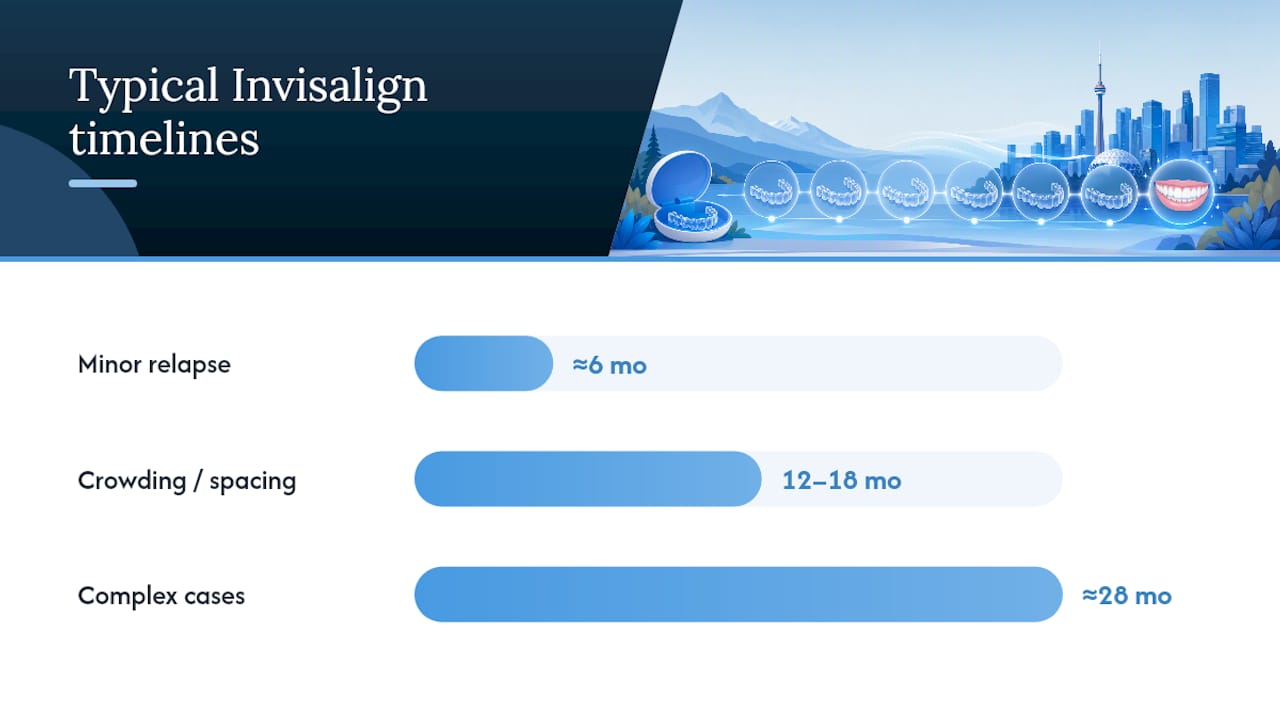
Modern Invisalign treatment stretches its capabilities with tools like tooth-colored attachments, interproximal reduction (shaving tiny amounts of enamel to create space), and elastics for bite correction. A minor relapse case might resolve in around six months. A typical crowding or spacing case runs 12 to 18 months. Complex cases involving several of these tools can stretch toward 28 months.
Who Isn’t a Good Fit, and What Needs to Happen First
Some conditions rule out aligners until they’re treated, and some habits make braces the safer bet regardless of your teeth. Here’s what commonly disqualifies someone, at least temporarily:
Active periodontitis. Moving teeth through infected gum and bone tissue can accelerate bone loss, so periodontal disease has to be stabilized before any aligner treatment starts.
Untreated cavities or failing fillings. Decay left alone under constant aligner pressure can worsen quickly, so restorative work usually comes first.
Major skeletal or jaw discrepancies. Cases where the upper and lower jaw are significantly mismatched often need combined surgical and orthodontic care, not aligners alone.
Unwillingness to commit to 20 to 22 hours of daily wear. Compliance is the single biggest non-clinical factor in whether treatment finishes on time, since inconsistent wear leads directly to slower or incomplete results.
Mixed dentition in younger patients. Kids still losing baby teeth generally need to wait until their permanent teeth have erupted before aligner treatment makes sense.
How Candidacy Gets Confirmed: Inside a Real Consultation
An online quiz can flag obvious red flags, but it can’t look at your bone density or root positioning. That’s why a real evaluation always includes physical records, not just a questionnaire.
A typical evaluation includes:
Intraoral photos and a digital scan (often using systems like iTero) that map your teeth in 3D
Panoramic X-rays or, in some cases, a CBCT scan or periapical X-rays to check root and bone conditions
A periodontal exam that charts gum health and bone support around each tooth
A simulated treatment plan, similar to ClinCheck, that shows projected tooth movement stage by stage
That simulated plan is where candidacy really gets confirmed. It reveals whether your case needs attachments, elastics, or extra stages, and it gives you a realistic timeline instead of a guess. For most straightforward cases, that timeline lands somewhere between 12 and 18 months.
Wear time matters more than almost anything else in the process. Aligners need 20 to 22 hours a day on your teeth to keep moving on schedule. Every hour under that target slows progress, and consistent shortfalls can add months to your treatment.
Invisalign’s own smile quiz is a useful starting point for curiosity, but it was built as an educational tool, not a diagnostic one. It can’t see your gum health or bone support, which is exactly what a real exam is for.
What Mersal Dental Sees in the Chair: Timelines and Delays
Across the cases we treat, most Invisalign patients finish in 12 to 18 months, matching what’s typical for moderate crowding and spacing cases. When treatment runs longer, it’s rarely a mystery. It’s usually inconsistent aligner wear, a need for additional restorative work discovered mid-treatment, or periodontal therapy that has to happen before we can keep moving teeth.
We also give patients clear rules around eating and drinking with aligners, since a few bad habits (sipping coffee with trays in, snacking constantly) undo weeks of progress fast.
When a case sits on the border, we don’t guess. If the scan shows minor bite issues layered with a skeletal mismatch, we’ll often recommend braces or a combined approach instead of stretching aligners past their limits.
Do Crowns and Bridges Affect Your Candidacy?
Having a crown, bridge, or other restoration doesn’t automatically disqualify you, but it does change how your treatment plan gets built. Aligners grip natural tooth enamel through pressure points and sometimes attachments, and a crown’s smooth, uniform surface can behave differently under that same pressure than a natural tooth does.
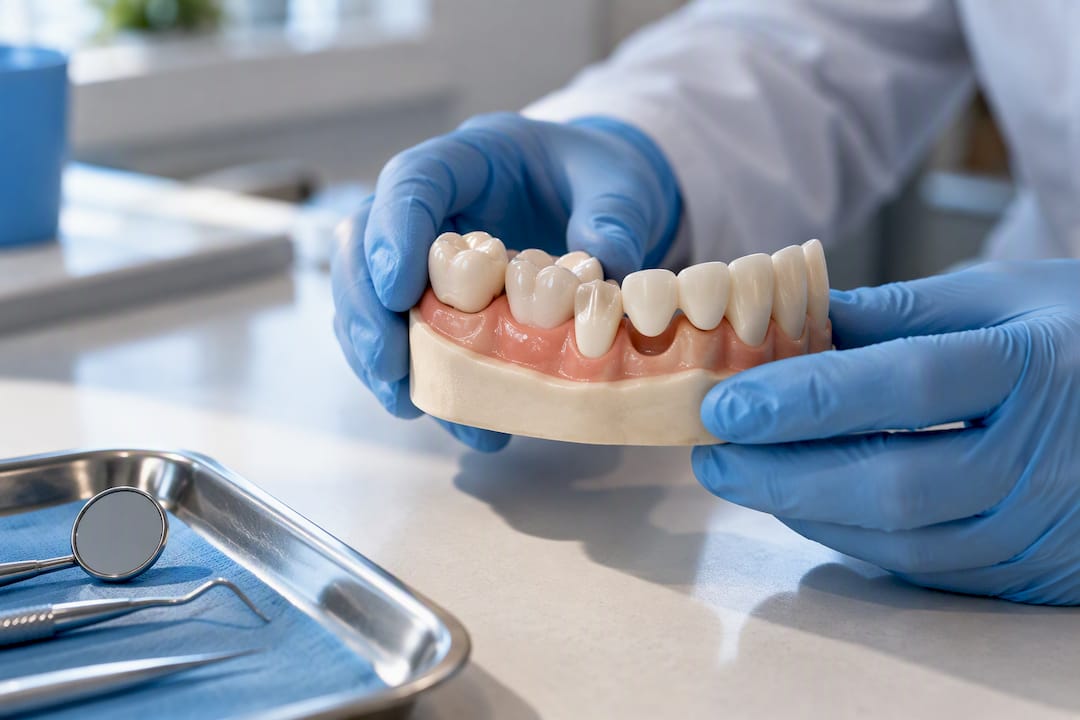
Isolated crowns on back molars usually cause few problems since those teeth aren’t typically part of major alignment corrections. Front-tooth crowns and bridges are trickier. A bridge spans two or more teeth as one rigid unit, which means those connected teeth can’t move independently the way aligners expect. In many cases, a bridge either needs to stay outside the movement plan entirely or be replaced after alignment finishes.
Large or numerous restorations also affect how attachments (the small tooth-colored bumps that help aligners grip) get placed, since they adhere better to natural enamel than to some crown materials. None of this is disqualifying on its own. It’s information your dentist needs before finalizing a plan, which is why a scan and exam matter more than a quiz when restorations are part of your history. If you’re weighing whether existing dental work like crowns or bridges will complicate aligner treatment, that’s a conversation worth having before you commit to either option.
If Invisalign Isn’t Right for You Yet, Here’s What Comes Next
Not qualifying today doesn’t mean never. Most non-candidates fall into one of two categories: fix something first, or choose a different straightening method entirely.
If active gum disease or untreated decay is the issue, the path is straightforward. Get the restorative work or periodontal treatment done, let your mouth heal, and revisit aligners once your gums and teeth are stable. This isn’t a detour so much as a required first step, since moving teeth through unhealthy tissue creates more problems than it solves.
If the issue is anatomical (a significant jaw discrepancy, teeth that need major repositioning, or roots too short for predictable aligner movement) traditional braces are often the more reliable option. Fixed braces can apply more targeted force and handle movements aligners aren’t designed for. Severe skeletal cases sometimes need a combined surgical and orthodontic approach, where braces or aligners finish the job after jaw surgery corrects the underlying structure.
There’s also a middle path worth knowing about: combined treatment, where braces handle the harder movements early on and aligners finish the case, or vice versa. If you’re trying to figure out which route fits your specific bite, a breakdown of aligners versus braces by case type is a useful starting point before your consult.
A Note From the Chair
An online quiz can spark curiosity, but it can’t replace sitting in a dental chair and having someone look at your bite, your bone support, and your gum health directly. Real candidacy comes down to three things working together: your anatomy, your oral health, and your willingness to wear your aligners consistently. Any one of those out of balance changes the plan. If you’re unsure where you stand, ask for an evaluation, and if something about the recommendation doesn’t sit right, a second opinion is always reasonable.
— Mersal
Booking a Consult at Mersal Dental: What Actually Happens
A dental consultation is the practical next step once you’ve run through your own checklist and want a real answer instead of a guess. Unlike a generic online quiz, a consult here gives you an actual digital scan, a written treatment estimate, and a direct check of your insurance coverage, including CDCP and IFHP where applicable, before you commit to anything.
Same-day treatment availability and emergency care mean patients can avoid long waits to get restorative work handled before starting aligners. Multilingual staff can help patients ask detailed questions about their case in the language they’re most comfortable with, which matters when deciding between aligners, braces, or a combined approach. If you’re ready to find out where you actually stand, book a consultation through our Invisalign page and get a scan-based answer instead of a guess.
Sources
For deeper clinical detail beyond this guide, see the PMC review on aligner limitations and Invisalign’s provider resources. Remember that online quizzes are educational tools, not diagnostic exams.
This article is general information, not a substitute for advice from a qualified doctor. Consult a qualified healthcare professional about your own circumstances before acting on anything here.
FAQ
What Would Disqualify Me From Invisalign?
Active gum disease, untreated cavities, and significant jaw or skeletal discrepancies are the most common disqualifiers. Most of these are temporary. Once the underlying issue is treated and your mouth is stable, aligners often become an option again.
Who Is Not Suitable for Invisalign?
Patients with severe skeletal jaw mismatches, very short tooth roots, or a history of poor compliance with removable appliances tend to do better with fixed braces. Younger patients still losing baby teeth usually need to wait until their permanent teeth have erupted.
Is $4,000 a Lot for Invisalign, and What Should I Expect to Pay in Canada?
Invisalign pricing varies widely based on case complexity, and Mersal Dental doesn’t publish a flat rate since every treatment plan is different. You can find current cost expectations for Canadian patients on our Invisalign cost guide, and a consult will give you a written estimate specific to your case.
How Long Does Invisalign Treatment Usually Take?
Most moderate crowding or spacing cases take 12 to 18 months, while minor relapse cases can finish in as little as six months. Complex cases involving attachments or staged movements can run closer to 28 months, with noncompliance and additional restorative needs being the most common causes of delay.
Recommended
Comments