Cracked Molar Pain: What to Do Right Now

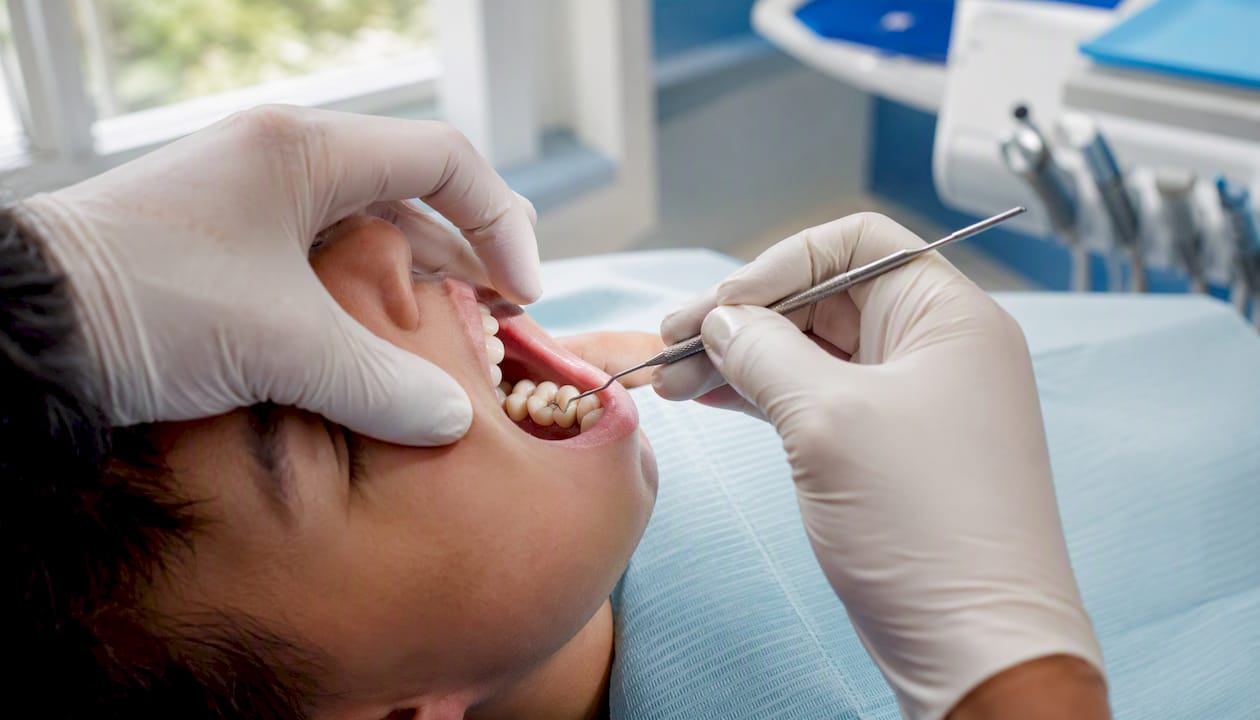
If biting down sends a sharp jolt through your tooth that fades the moment you release pressure, you’re likely dealing with a cracked molar. Stop chewing on that side immediately, rinse gently with warm water, and take an over-the-counter pain reliever at the standard adult dose. Call a dentist today, not next week.
A few signs separate an urgent case from one that can wait a day or two. Watch for these:
Sharp pain that hits on the bite and releases fast — classic for cracked tooth syndrome, the most common pattern we see with cracked molars.
Lingering sensitivity to hot or cold that outlasts 30 seconds after the stimulus is gone. This can point to nerve damage that needs same-day attention.
Swelling, fever, a pimple-like bump on the gum, or a tooth that feels loose. Any of these means the crack has likely let bacteria into the pulp, and you need urgent care today.
We know tooth pain rarely waits for a convenient time. That’s exactly why we’re walking you through what a cracked molar feels like, why it happens, how dentists actually diagnose it, and what treatment usually looks like, so you can act with confidence instead of guessing.
Key Takeaways
A cracked molar causing sharp bite pain or lingering temperature sensitivity needs same-day dental evaluation, since delay lets the fracture spread and raises the odds of losing the tooth entirely.
Point | Details |
Recognize the pattern | Sharp pain on biting that releases fast, plus thermal sensitivity lasting past 30 seconds, points to a cracked molar. |
Act immediately | Stop chewing on that side, rinse with warm salt water, and use an NSAID or acetaminophen at standard dosing. |
Know the emergency signs | Swelling, fever, a gum bump, or tooth mobility mean same-day or emergency care, not a wait-and-see approach. |
Treatment depends on depth | Shallow cracks may need only bonding or a crown; pulp involvement usually means root canal therapy. |
Prevent the next one | A night guard for bruxism and avoiding ice or hard candy meaningfully lower repeat-crack risk. |
Same-day help is available | Mersaldental offers emergency exams, stabilization, crowns, root canals, and direct insurance billing including CDCP/IFHP. |
Table of Contents
Cracked Molar Symptoms: How to Recognize the Pattern
The hallmark of a cracked molar is pain that behaves strangely compared to a cavity or gum problem. You bite into food, feel a sharp, electric pain, and then it’s gone almost instantly when you release your jaw. That release pattern happens because the crack flexes open under pressure, irritating the nerve, then closes again once the force lifts.
Temperature sensitivity is the second big clue. A quick jolt from cold water or ice cream that fades in a few seconds is common with a small crack and doesn’t necessarily mean trouble. But if the ache from a hot drink or cold air lingers 30 seconds or longer after you stop the stimulus, that’s a signal the pulp, the nerve tissue inside your tooth, may be irreversibly inflamed. This is one of the clearest home red flags you have, and it usually means the difference between a simple restoration and needing root canal therapy.
Pain from a cracked molar is also notoriously hard to pinpoint. Molars sit near a dense network of nerves, so pain frequently radiates to a neighboring tooth, the jaw, the ear, or even the temple. It’s common to be convinced the problem is your upper tooth when it’s actually a lower molar, or vice versa. That referred-pain pattern is why dentists rely on specific tests rather than just asking “which tooth hurts?”
It’s worth ruling out mimickers before assuming the worst. Sinus pressure can mimic upper molar pain, TMJ dysfunction can cause dull aching near the jaw joint, and gum disease produces a different kind of throbbing tied to swelling rather than biting. Reversible pulpitis, a milder nerve irritation from a cavity or worn filling, causes brief sensitivity too but usually without the sharp bite-and-release pattern. If you’ve noticed your tooth feels numb when you bite down rather than sharp, that’s a different signal worth mentioning to your dentist as well.
Causes of a Cracked Molar and Who’s at Higher Risk
Most cracked molars don’t come from a single dramatic event. They build up from repeated stress until the tooth finally gives.
Chewing hard foods and objects. Ice, popcorn kernels, hard candy, and unshelled nuts are the usual suspects. Molars absorb far more bite force than front teeth, which is exactly why they crack more often.
Bruxism and clenching. Grinding your teeth at night, often without knowing it, applies constant, uneven pressure that weakens enamel over years.
Large or aging fillings. A tooth with an extensive filling has less natural structure left to resist flexing, so the remaining walls are more prone to splitting.
Prior root canal treatment. A root-canaled tooth loses some internal moisture and becomes more brittle over time, which raises fracture risk if it isn’t protected with a crown.
Direct trauma. A fall, a sports injury, or even an unexpected bite on something hard like a bone fragment can crack a tooth instantly.
Age-related wear. Enamel and dentin naturally accumulate microscopic fatigue over decades of chewing, which is part of why cracked tooth syndrome shows up more often in adults over 40.
Many patients never remember the moment their molar cracked. The tooth may have developed a hairline fracture months earlier and stayed silent until a piece of hard food finally triggered pain while chewing. If you already grind your teeth, a custom night guard is one of the most effective ways to reduce the odds this happens again, and it’s worth discussing at your next visit rather than waiting for a second cracked tooth to bring it up.
Types of Tooth Cracks and Why the Type Matters
Not every crack carries the same risk, and the category your dentist assigns often determines whether your molar can be saved with a simple restoration or needs more aggressive treatment.
Craze lines are shallow, hairline cracks limited to the enamel surface. They’re extremely common in adults, usually painless, and mostly a cosmetic concern rather than a structural one.
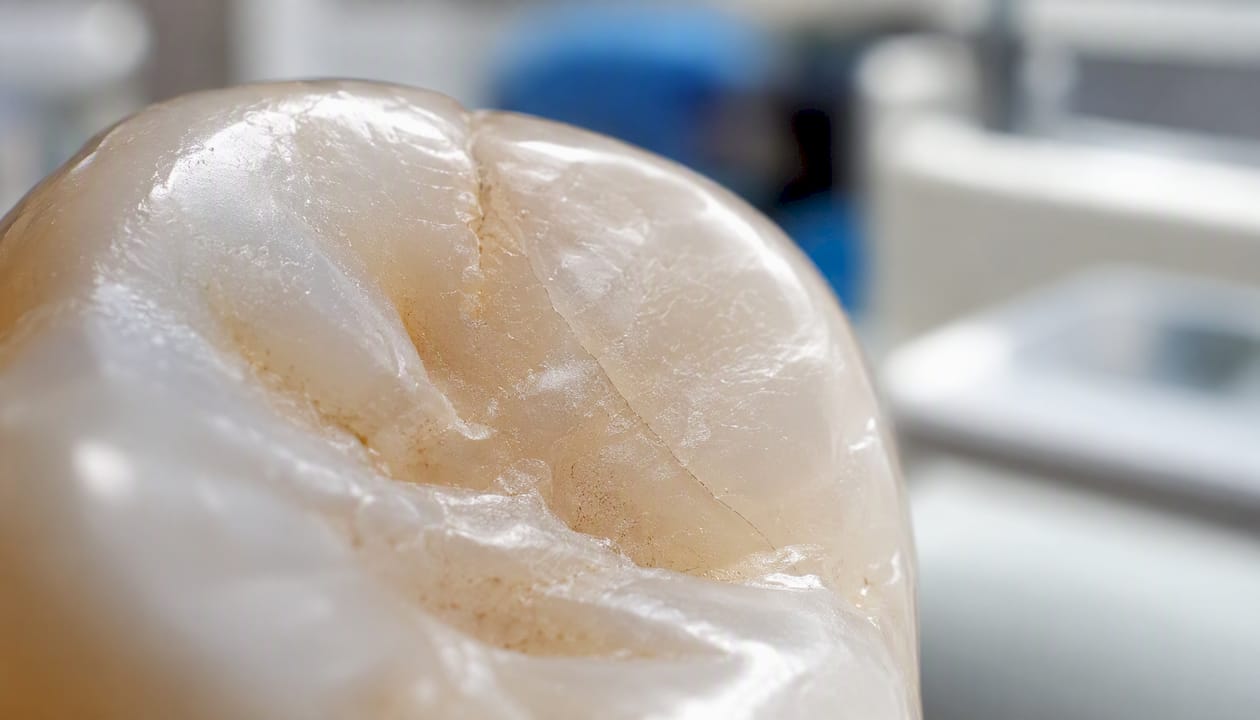
A fractured cusp occurs when a pointed part of the chewing surface breaks off, often around an existing filling. This tends to be uncomfortable but rarely threatens the nerve, and it’s frequently repaired with a crown or a bonded restoration.
A true cracked tooth, sometimes called an incomplete fracture, extends from the chewing surface toward the root without fully separating the tooth. This is the classic presentation of cracked tooth syndrome, and it’s the category most likely to need root canal therapy if the crack reaches the pulp.
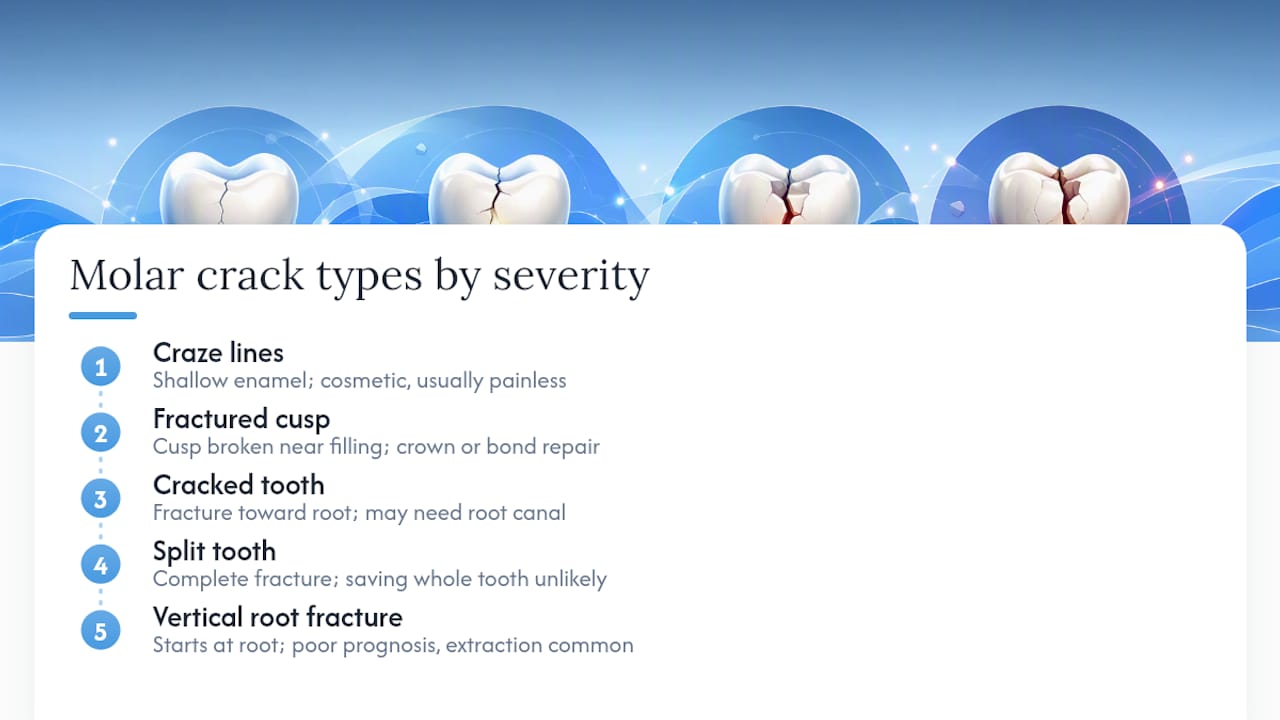
A split tooth has progressed to a complete fracture, dividing the tooth into two distinct segments. At this stage, saving the whole tooth usually isn’t possible, though one segment can sometimes be preserved with a crown if the root beneath it stays healthy.
A vertical root fracture starts at the root and moves upward, often with few obvious symptoms until infection sets in. This type tends to carry the poorest prognosis because the crack lets bacteria reach deep tissue that’s difficult to seal, and extraction is common.
Because molars handle constant chewing force, a crack that starts small rarely stays that way. Getting it evaluated while it’s still a “cracked tooth” rather than letting it progress to a “split tooth” is often what preserves your options.
How Dentists Diagnose a Cracked Molar
Diagnosing a crack is genuinely one of the trickier problems in general dentistry, because standard X-rays frequently miss the fracture line entirely when the crack runs vertically rather than horizontally. Your dentist has to build a picture using several tools together rather than relying on one image.
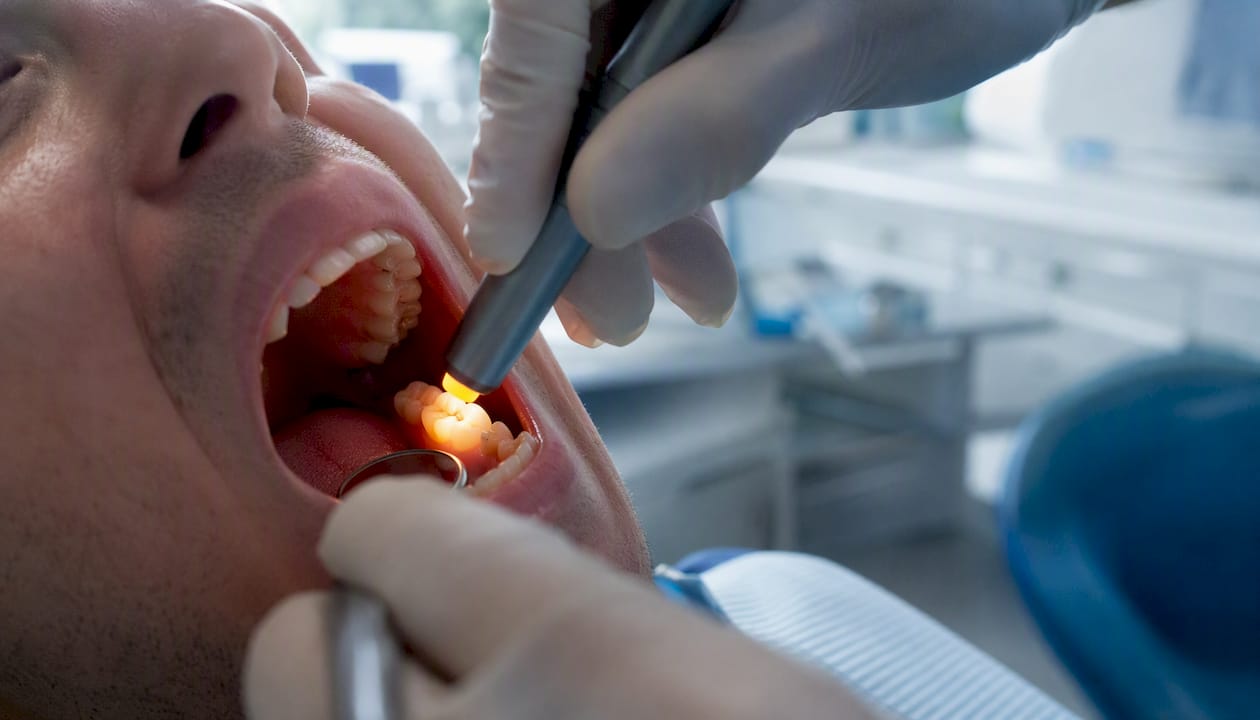
The appointment typically follows a logical sequence. First comes a focused history: what triggers the pain, whether it’s worse on release or on pressure, and whether you’ve had recent dental work on that tooth. Next, your dentist reproduces the pain using bite tests, often with a device called a Tooth Slooth II or a simple wooden stick, applied to one cusp at a time until the exact spot that hurts is isolated. Transillumination, shining a bright light through the tooth, can reveal a crack as a shadow line that interrupts the light. A magnified visual exam and periodontal probing round out the physical check, since a crack sometimes shows up as an isolated deep pocket next to an otherwise healthy gumline.
Imaging comes next, but with realistic expectations. Conventional radiographs catch some fractures, particularly ones running horizontally, but a 3D cone-beam CT (CBCT) scan may be ordered when a hairline vertical crack is suspected and standard films come back clean.
Diagnostic method | What it checks | What it reveals |
Patient history and trigger review | Pain pattern, timing, recent dental work | Suggests whether pain fits cracked tooth syndrome or another cause |
Bite test (Tooth Slooth, wooden stick) | Isolated cusp pressure and release | Pinpoints the exact cusp or wall harboring the crack |
Transillumination | Light transmission through the tooth | Shows a visible shadow line where the crack interrupts light |
Periodontal probing | Localized pocket depth around the tooth | Flags a narrow, isolated deep pocket tied to a vertical crack |
Conventional radiograph | Bone level and visible fracture lines | Confirms horizontal fractures; often misses vertical ones |
CBCT (3D imaging) | Detailed cross-sectional view | Detects hairline or root fractures invisible on standard film |
Pro Tip: Before your appointment, jot down exactly which foods or temperatures trigger the pain and roughly how long it lasts. Telling your dentist “cold water hurts for about a minute” instead of just “my tooth hurts” can cut diagnostic time significantly, since it points them straight toward pulp involvement.
Treatment for a Cracked Tooth: What Determines the Plan
Treatment depends almost entirely on how deep the crack runs and whether it has reached the pulp. Your dentist will usually start conservatively and escalate only if the tooth’s response demands it.
Immediate stabilization often comes first, especially if you can’t get in for definitive treatment the same day:
A temporary crown or bonded resin band placed over the cracked cusp to stop the segments from flexing apart.
A bite adjustment to remove pressure from the cracked side while it heals.
A protective liner if the crack is close to, but hasn’t yet reached, the nerve.
Definitive treatment follows once the extent of the crack is clear:
Bonding or a filling works for shallow cracks that haven’t reached the pulp and don’t involve much lost structure.
A crown or onlay is the standard fix for a fractured cusp or a cracked tooth confined mostly to the chewing surface, since it wraps the tooth and prevents the crack from spreading under future chewing forces. Explore the crowns and bridges options available if this is the direction your treatment takes.
Root canal therapy becomes necessary once the crack reaches the pulp, which is often signaled by that lingering hot or cold sensitivity we mentioned earlier. Removing the damaged nerve tissue stops the pain at its source, and the tooth is then capped with a crown for long-term strength.
Extraction is reserved for split teeth or vertical root fractures where too little healthy structure remains to support a restoration.
Pulp involvement, how deep the crack runs, and your own healing capacity all factor into which path your dentist recommends. When saving the tooth is realistic, endodontists specialize in exactly this kind of case, and early referral meaningfully improves the odds of keeping your natural molar. Expect two to three visits for a root canal and crown combination, spread over several weeks, versus a single visit for simple bonding.
When a Cracked Molar Turns Into an Emergency
A cracked molar becomes a genuine dental emergency when the crack has let infection take hold. The signs are hard to miss once they appear: spontaneous throbbing pain that shows up without any trigger, swelling in the cheek or along the jawline, a fever, or a small pimple-like bump on the gum near the tooth that may be draining pus. Tooth mobility, where the molar feels loose when you press on it, is another sign that shouldn’t wait.
Call your dentist’s emergency line immediately if you notice any of these. If swelling starts affecting your ability to breathe or swallow, or spreads toward your eye or neck, go to a hospital emergency department instead of waiting for a dental office to open. That combination points to a spreading infection that needs immediate medical intervention alongside dental care. While you’re arranging transportation, keep your head elevated, apply a cold compress to the outside of your cheek to slow swelling, and avoid lying flat, which can worsen pressure in the area.
Safe Pain Relief Until You See a Dentist
Getting through the next 24 to 48 hours without making things worse matters just as much as treating the crack itself. A few clear rules keep you comfortable and safe.
Avoid chewing on the affected side entirely, even with soft foods, since pressure is what triggers the sharp pain and can worsen the crack.
Apply a cold pack to the outside of your cheek for 15 to 20 minutes at a time to reduce swelling and dull the ache.
Rinse gently with warm salt water (about half a teaspoon of salt in a cup of warm water) a few times a day to keep the area clean.
Take an NSAID like ibuprofen at the standard adult dose, or acetaminophen if you can’t take NSAIDs, following the package’s dosing limits closely.
Skip aspirin placed directly against the gum or tooth. It doesn’t relieve pain that way and can chemically burn soft tissue.
Don’t apply clove oil, alcohol, or other home remedies directly to the crack. They can irritate exposed nerve tissue and mask symptoms your dentist needs to see clearly.
Never try to pull out a loose fragment yourself, even if it feels like it’s barely attached, since removing it prematurely can damage the socket underneath.
Don’t take leftover antibiotics from a previous prescription. Without knowing whether infection is present or which bacteria are involved, this can do more harm than good and delay proper treatment.
A temporary dental cement from the pharmacy can be reasonable for covering a sharp edge or a lost filling for a day or two, but it’s a stopgap, not a fix. If pain persists or worsens despite these steps, that’s your cue to call rather than wait it out. For general sensitivity between flare-ups, treatments for sensitive teeth can help, though they won’t resolve an actual crack.
Preventing Future Cracks and What Follow-Up Looks Like
Once your current molar is treated, a few habits meaningfully lower your odds of a repeat. A custom night guard is the single most effective step if you grind or clench your teeth, since it absorbs the force that would otherwise concentrate on your enamel. Beyond that, steer clear of chewing ice, popcorn kernels, and hard candy, replace large or aging fillings before they weaken further, and keep up with regular checkups so small issues get caught before they become fractures.
After treatment, expect a short follow-up schedule. Most dentists check restoration integrity and rule out lingering infection around the two-month mark, then again at one year to confirm the crown or filling is holding and the tooth has stayed symptom-free. If a crack was deep or involved the root, you may be referred to an endodontist or oral surgeon for specialized monitoring. Stabilizing a crack early, rather than waiting until pain becomes constant, is consistently what preserves the widest range of treatment options down the line.
A Dentist’s View: How We Evaluate a Painful Cracked Molar
When a patient calls us describing sharp pain on biting, we start the same way every time: a focused conversation about what triggers the pain, how long any temperature sensitivity lasts, and whether the tooth has had previous fillings or root canal work. That history alone often narrows down which tooth and which cusp we’re dealing with before we even look inside your mouth.
From there, we move to a physical exam using bite tests to isolate the exact spot, checking for visible cracks under magnification, and taking an X-ray to rule out other causes like a failing filling or an abscess at the root tip. If the crack is confirmed and the tooth is salvageable, we’ll place a temporary stabilizing restoration the same day to stop the pain and protect the tooth while we plan next steps, whether that ends up being a crown, a root canal, or in more advanced cases, an extraction.
If you’re coming in for a suspected cracked molar, it helps to bring a quick note on what triggers your pain, any recent dental work on that tooth, and your insurance information so we can handle billing directly. We keep same-day slots open specifically for situations like this, because a cracked molar rarely waits for a convenient appointment time.
What Most Advice Gets Wrong About Cracked Molar Pain
Most articles on this topic bury the urgency question under a wall of anatomy. That’s backward. The single most useful thing a patient can learn is the 30-second rule: if hot or cold sensitivity lingers past half a minute, treat that as your cutoff for waiting, not the pain’s intensity. Intensity is misleading. A crack can be genuinely severe yet cause only brief, sharp twinges, while a much smaller crack that’s reached the pulp produces a duller ache that simply won’t quit.
The other place conventional advice falls short is treating “see a dentist eventually” as sufficient guidance. It isn’t. A cracked tooth’s prognosis is a moving target. It gets worse with every chewing cycle until it’s stabilized, which is exactly why molars, the hardest-working teeth in your mouth, are also the ones most likely to progress from a manageable crack to a split tooth in a matter of weeks. Waiting to “see if it gets better” is usually the single costliest decision a patient makes with this condition. If you take one thing from this guide, let it be this: treat the timing of your symptoms, not just their severity, as your signal for how fast to act.
If You Need Same-Day Care, Here’s How Mersal Dental Can Help
Cracked molar pain rarely announces itself in advance, and Mersaldental keeps same-day appointment slots open specifically for situations like this. We handle the full range of care a cracked molar might need: emergency exams and bite testing, temporary stabilization, crowns and bridges for teeth that can be restored, root canal therapy when the pulp is involved, and extractions for teeth that can’t be saved.

We also bill most insurance plans directly, and we accept both the Canadian Dental Care Plan and IFHP, so cost doesn’t have to be a barrier to getting seen quickly. If you’re in pain right now, the most useful next step is a phone call, not another hour of searching symptoms online. Reach out through our emergency care page to describe what you’re feeling, and we’ll get you into a chair the same day whenever possible.
Frequently Asked Questions
Can a cracked molar heal on its own? No. Unlike a cavity, a crack in tooth structure doesn’t remineralize or seal itself. Without treatment, chewing forces typically cause it to widen over time.
Is it safe to wait a few days before seeing a dentist? If your pain is mild, brief, and only triggered by biting on hard foods, a few days is usually low risk, but book the appointment now rather than waiting to see if it improves. If you notice lingering thermal sensitivity, swelling, or fever, treat it as urgent and seek same-day care.
Why does my cracked tooth hurt more after eating than while eating? Pain that builds after a meal often means the crack extends deeper than the enamel, since sustained pressure during chewing can irritate inflamed pulp tissue that continues aching after you stop.
What’s the difference between a cracked molar and a cavity? A cavity typically causes a duller ache tied to specific foods, especially sweets, and worsens gradually. A cracked molar produces that distinctive sharp pain on biting release along with more erratic, unpredictable triggers.
Will I definitely need a root canal for a cracked molar? Not necessarily. Shallow cracks confined to the enamel or a fractured cusp often only need a crown or bonded restoration. Root canal therapy becomes necessary only once the crack reaches the pulp.
Sources
These clinical references back the diagnostic and treatment guidance covered throughout this article.
A note on this guide: this article provides general information about cracked molar pain and is not a substitute for professional dental advice. Confirm your specific situation with a licensed dentist or endodontist.
Recommended
Comments