Dental Cleaning Appointment: How to Book and What to Expect

Updated: Jul 27

A dental cleaning appointment is a scheduled professional visit where a hygienist removes plaque and tartar, polishes your teeth, and a dentist checks your overall oral health. You can book your appointment online, call the office directly, or ask about same-day openings if you need to get in quickly. Most routine cleanings run between half an hour and an hour, with new patient visits often taking about an hour when X-rays are included.
Here is what to know before you schedule:
Online booking: Many offices, including Mersaldental, offer an online booking form so you can request an appointment any time without waiting on hold.
Phone or walk-in: Call the office to ask about same-day or next-day availability, especially if you have a specific concern.
Cost without insurance: Routine prophylaxis typically runs a moderate out-of-pocket cost, depending on your location and the office.
With insurance: Many dental plans cover two routine cleanings per year at little or no cost to you.
Duration: Plan for 30–60 minutes for a routine visit; new patient appointments often run the full hour.
Providing your insurance provider name and member ID when you book lets the office verify your benefits before you arrive, which prevents billing surprises at check-in.
Table of Contents
What is a dental cleaning and why does it matter?
A professional cleaning, called prophylaxis in clinical terms, goes well beyond what a toothbrush can do at home. A hygienist uses specialized instruments to remove hardened tartar (calculus) that builds up on and between teeth over time. Tartar cannot be brushed away once it forms. The visit also includes polishing to remove surface stains and flossing to clear debris from between teeth.
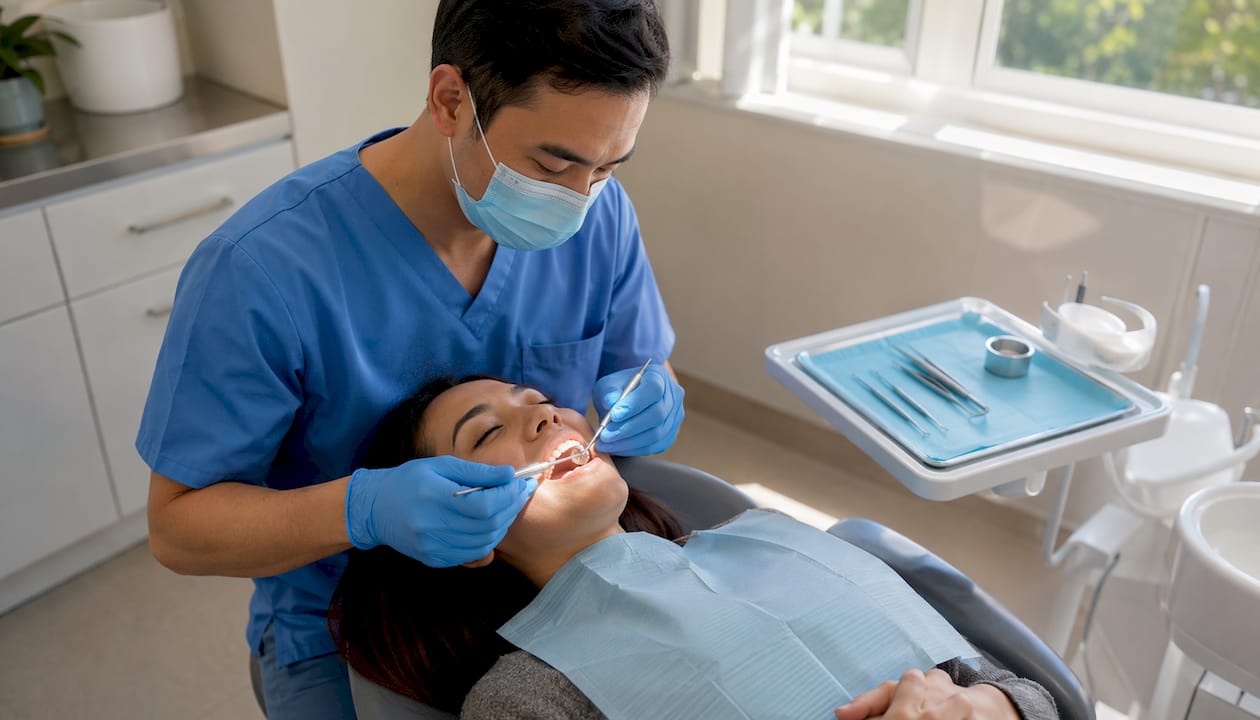
The preventive value is significant. Routine cleanings are linked to lower rates of gingivitis and periodontitis, and catching small problems early means avoiding more invasive and costly treatment later. Regular professional cleanings also give your dentist a chance to spot early signs of oral cancer, cracked teeth, and other conditions that are far easier to treat when found early.
Gum disease has been associated with broader health concerns including cardiovascular disease and diabetes complications, which is why the American Dental Association recommends keeping these visits on schedule.
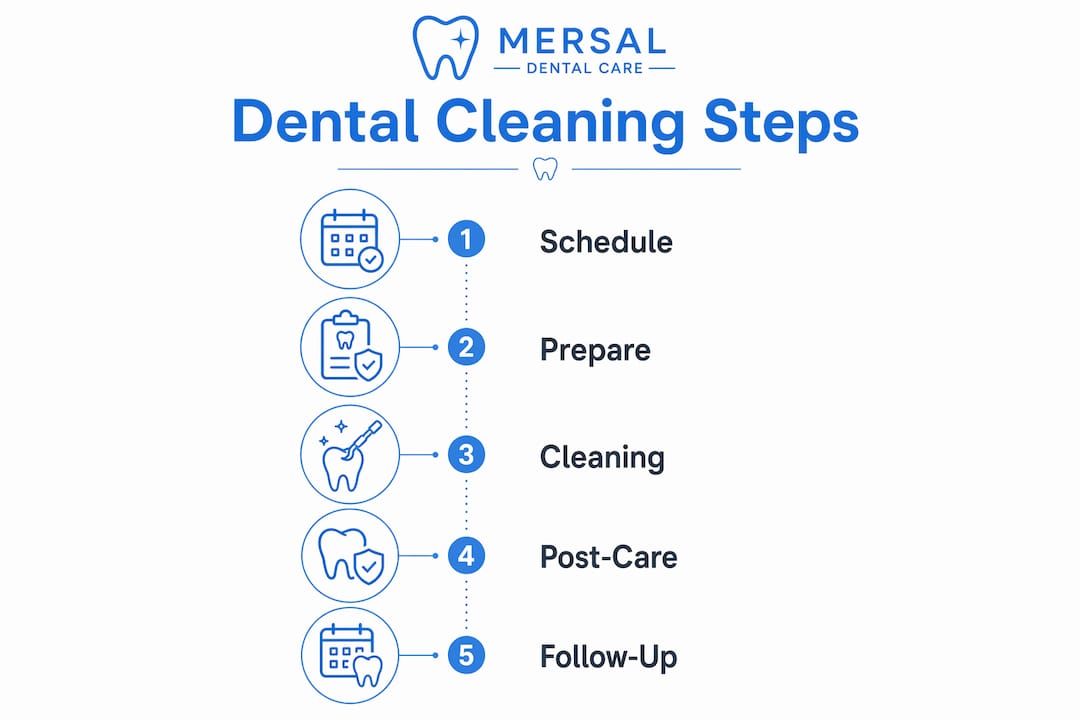
What happens during your dental cleaning appointment, step by step
Knowing what to expect makes the whole experience more comfortable. Here is how a typical visit unfolds from the moment you walk in.
Arrival and check-in. Bring your insurance card, a photo ID, and a list of any current medications. New patients will complete a medical history form; many offices let you do this online ahead of time to speed things up.
Initial screening. Your hygienist does a visual exam of your gums and teeth, noting any areas of concern. If dental X-rays are due, they are usually taken at this stage. X-rays help identify decay between teeth and bone changes that are invisible to the naked eye.
Scaling. The hygienist uses hand scalers or an ultrasonic device to break up and remove tartar from tooth surfaces and along the gumline. This is the step most people feel as mild pressure or scraping. If you have sensitive areas, speak up so the hygienist can adjust.
Polishing. A gritty paste and a rotating brush smooth and polish the enamel surface, removing surface stains from coffee, tea, and food.
Flossing. Professional flossing clears any remaining debris and checks gum tissue between teeth.
Fluoride or sealants (if recommended). Some patients benefit from a fluoride treatment or sealants applied at the end of the visit, particularly children and adults with a higher cavity risk.
Dentist exam and next steps. The dentist reviews findings, discusses any concerns, and recommends a follow-up schedule. Before you leave, the front desk will help you book your next cleaning.
Pro Tip: Tell the staff about any medications you take, whether you are pregnant, or if you have dental anxiety before the appointment starts. This lets them adjust their approach, offer comfort options, and plan extra time if needed.
How long does a dental cleaning appointment take?
For most returning patients with good oral health, a routine cleaning runs 45–60 minutes. New patient visits often take the full hour because they include a comprehensive exam and, frequently, X-rays. If you have significant tartar buildup, periodontal disease, or need additional treatment added to the visit, expect 60–90 minutes or a follow-up appointment.
A few things that commonly extend appointment time:
Bitewing or full-mouth X-rays (adds 10–20 minutes)
Heavy tartar buildup requiring extra scaling time
Periodontal probing and charting for patients with gum disease history
Adding a fluoride treatment or sealants
Scheduling tips: early morning or late afternoon slots tend to have the least wait time. If your schedule is tight, ask specifically for a “hygiene-only” appointment and mention that when you book online. Same-day openings are sometimes available for patients who call first thing in the morning.

Cost, insurance, and billing: what you will likely pay
Cost varies by region, office, and the type of cleaning you need. The table below gives a general picture for the United States.
Cleaning type | Typical cost without insurance | With insurance (2 visits/year) |
Routine prophylaxis | — | Often a modest co-pay |
Periodontal maintenance | — | Partial coverage; varies by plan |
Scaling & root planing (per quadrant) | — | Partial coverage; pre-auth often required |
Full-mouth debridement | — | Varies; may require follow-up cleaning |
Different clinics accept different insurance plans, so it is worth calling ahead to confirm the office participates with your provider before your visit.
Before and at your appointment, keep these steps in mind:
Have your insurance provider name and member ID ready when you call or book online.
Ask the office to verify your benefits and confirm whether they offer direct billing.
Ask about any co-pay or unmet deductible so you are not caught off guard.
Bring your benefit card on the day of the visit.
If cost is a barrier, ask whether the office participates in government assistance programs such as the CDCP or IFHP.
Patients with a history of gum disease are often placed on periodontal maintenance rather than standard prophylaxis. Insurance treats these differently, so confirm which code applies to your situation before assuming full coverage.
Routine vs. deep cleaning: which type do you need?
Not every cleaning is the same. The type your dentist recommends depends on your current gum health and history.
Cleaning type | Who it is for | Key difference |
Routine prophylaxis | Healthy gums, no gum disease history | Removes plaque and tartar above and just below the gumline |
Periodontal maintenance | History of gum disease or periodontitis | More frequent visits; deeper cleaning; different insurance codes |
Scaling & root planing | Active gum disease, deep pockets | Cleans below the gumline; may require local anesthetic |
Full-mouth debridement | Heavy buildup blocking a proper exam | Preliminary cleaning before a full assessment |
A routine prophylaxis differs significantly from periodontal maintenance in both clinical scope and insurance billing. If your dentist recommends a deep cleaning, ask these questions: How many quadrants are involved? Will local anesthetic be used? What does my insurance cover for this code? When will we reassess?
Patients with a history of periodontitis typically need maintenance visits every 3–4 months rather than the standard six-month schedule. Insurance often covers these at a different rate, so pre-authorization is a smart step.
Pain, anesthesia, and managing dental anxiety
Most people feel mild pressure and scraping during a cleaning, not sharp pain. Some sensitivity around the gumline is normal, especially if it has been a while since your last visit. Gums may feel slightly tender for a day or two afterward.
If you are nervous about the appointment, you are not alone. Dental anxiety is common, and telling the office ahead of time helps them prepare comfort options for you.
Comfort and sedation options that offices commonly offer:
Topical anesthetic gel applied to numb the gums before scaling
Local anesthetic injected for patients with significant sensitivity
Nitrous oxide (laughing gas) for mild to moderate anxiety
Oral sedation or other medication options for more significant anxiety (ask your dentist)
Always tell your dental team about any medications you take, any health conditions, and whether you are pregnant. Some sedation options are not appropriate during pregnancy. For more detail on anesthesia and comfort options, your dental team can walk you through what is safe for your specific situation.
Pro Tip: Call the office before your appointment and say plainly that you have dental anxiety. Ask them to schedule extra time and confirm what comfort options they offer. A brief conversation before you arrive makes the visit noticeably calmer.
How often should you book a cleaning, and when to go sooner
Most people benefit from professional cleanings about every six months, though the right frequency depends on your personal oral health history and risk factors.
You may need more frequent visits if you:
Smoke or use tobacco products
Have diabetes or a condition that affects gum health
Have a history of periodontal disease
Are pregnant (hormonal changes increase gum sensitivity)
Wear braces or other orthodontic appliances
Struggle with dry mouth, which raises cavity and gingivitis risk
Book an appointment sooner rather than waiting if you notice any of these red flags: bleeding gums when you brush or floss, persistent bad breath that does not resolve with brushing, loose teeth, visible brown or yellow buildup along the gumline, or tooth pain. These symptoms suggest something is already progressing, and earlier care means simpler treatment.
How to prepare for your appointment and what to do after
A little preparation makes check-in faster and the visit more comfortable.
Before your appointment:
Bring your insurance card, photo ID, and a list of current medications.
If you are a new patient, gather any recent dental records or X-rays from your previous dentist.
Complete any online intake forms the office sends you ahead of time.
Eat normally before the visit; there is no need to fast for a routine cleaning.
Arrive five to ten minutes early to handle any remaining paperwork.
After your cleaning:
Expect mild sensitivity for 24–48 hours, especially to cold or sweet foods. Over-the-counter ibuprofen or a desensitizing toothpaste helps.
Avoid dark-staining foods and drinks (coffee, red wine, berries) for 24 hours if you had a polishing treatment.
Brush and floss gently that evening; your gums may be slightly tender.
If sensitivity or soreness persists beyond 48 hours, call your dental office. Persistent pain is worth a follow-up, not something to wait out.
For aftercare products recommended by your dental team, ask at checkout or check the clinic’s product recommendations.
Why research supports keeping regular professional cleanings
The evidence for regular professional cleanings is consistent across major health institutions. Dental cleanings are a cornerstone of preventive care, with strong links to lower rates of gingivitis, periodontitis, and the downstream invasive procedures those conditions require.
The Mayo Clinic notes that persistent bad breath is often a sign of gum disease or decay, both of which regular cleanings help prevent. UCSF’s dental center emphasizes that preventive visits reduce the likelihood of needing restorative work. Patients who skip cleanings and wait for symptoms often face more complex and costly treatment by the time they seek care.
If you are pregnant, dental care during pregnancy is safe and recommended. Hormonal changes during pregnancy increase the risk of gum inflammation, making a cleaning especially valuable. A trusted resource on dental treatment during pregnancy can help you understand what is safe and what to discuss with your provider.
Mersaldental is ready to see you for your next cleaning
Mersaldental, located in lower town Ottawa, offers professional hygiene appointments for new and returning patients, with direct insurance billing so you are not left managing paperwork on your own. We accept the Canadian Dental Care Plan (CDCP) and the Interim Federal Health Program (IFHP), which means more patients can access the preventive care they need without cost being a barrier.
We also offer same-day appointments and emergency dental services for patients who cannot wait. Whether you are overdue for a routine cleaning, dealing with a dental concern found at your last exam, or simply looking for a new dental home, our team is ready to help. Multilingual staff and a welcoming environment make every visit as comfortable as possible.
Book your hygiene appointment online today, or visit Mersaldental to learn more about our full range of services.
Key Takeaways
Regular dental cleaning appointments, booked every six months and supported by direct insurance billing, are the most effective way to prevent gum disease and avoid costly restorative treatment.
Point | Details |
Book online or by phone | Use an online booking form or call directly; provide your insurance ID at booking to avoid billing surprises. |
Typical visit is 45–60 minutes | New patient appointments often run the full hour; deep cleanings or X-rays add time. |
Cost with insurance is often low | Routine prophylaxis is covered by most plans twice yearly; out-of-pocket cost without insurance runs —. |
Know your cleaning type | Routine prophylaxis, periodontal maintenance, and scaling & root planing differ in scope, frequency, and insurance coverage. |
Mersaldental accepts new patients | Mersaldental in Ottawa offers direct insurance billing, CDCP/IFHP acceptance, and same-day availability for hygiene appointments. |
Recommended
Comments