24–72 Hours to Stop Crown Pain When Biting for Ottawa Adults


If your crown only hurts when you bite, it’s most likely sitting slightly high, and a quick chairside adjustment usually fixes it within a day or two. Less commonly, biting pain signals nerve irritation, a cracked tooth, a loose crown, decay underneath it, or grinding damage. Call your dentist right away if you notice swelling, fever, a bad taste, or pain that gets worse at night.
TL;DR:
A high crown is the most common cause of biting pain in the first few days and typically resolves with a quick polishing of the contact area.
Lingering pain, throbbing, or pain worsening at night indicates nerve irritation and may require root canal treatment.
Sudden sharp pain when releasing the bite suggests a cracked tooth, often needing endodontic evaluation for proper diagnosis.
Symptoms like swelling, fever, pus, or a loose crown signal possible infection or cement failure requiring urgent professional care.
Home remedies such as over-the-counter pain relief and soft foods can help temporarily, but persistent or worsening pain warrants immediate dental assessment.
Table of Contents
What Causes Crown Pain When Biting Down
Every cause of crown pain when biting leaves its own signature. Learning to read that signature tells you how urgent the problem really is.
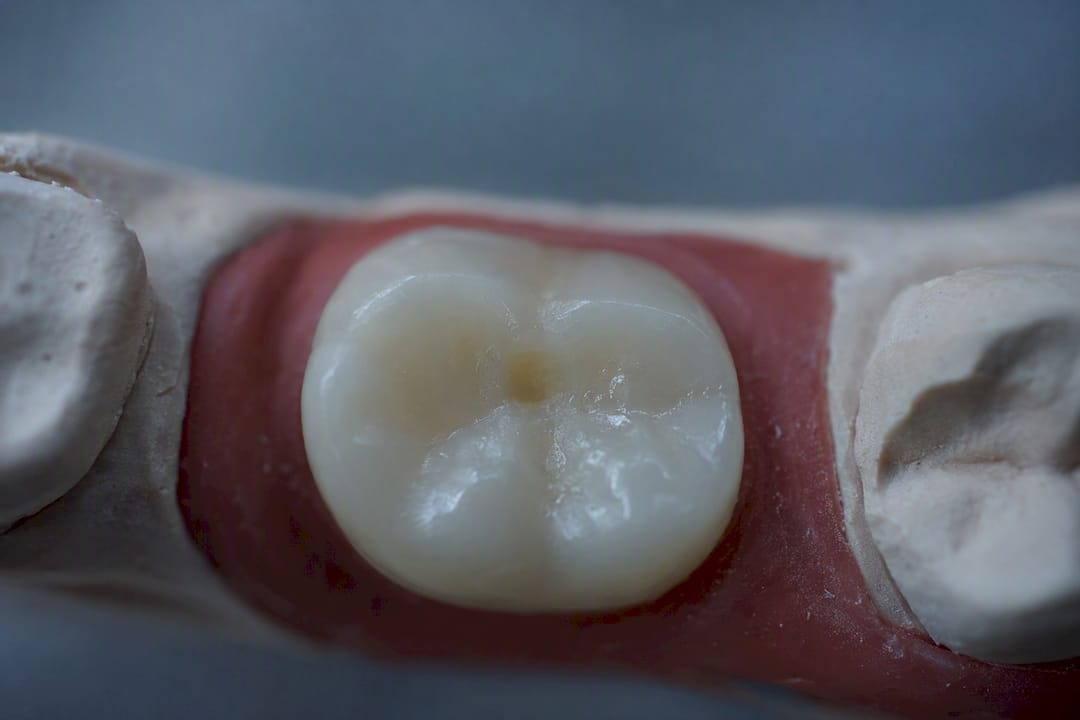
A high crown, also called a high bite or high spot, is the single most common reason a crown hurts when you bite. During placement, your gum tissue is often numb and slightly swollen, which changes how your bite feels in the chair. Once the anesthesia wears off and swelling settles, even a fraction of a millimeter of extra height on the crown concentrates all your biting force onto that one tooth. The periodontal ligament, the thin cushion of tissue anchoring your tooth in its socket, gets compressed every time you close down, and that produces a sharp, localized pain right at the moment of contact. It sounds dramatic for such a small mechanical issue, but a brief polish of the high spot with a rotating tool typically resolves it within a day or two.
Pulpitis, or inflammation of the nerve inside the tooth, feels different. Instead of a sharp jab only on biting, you’ll notice lingering sensitivity to hot or cold, throbbing that doesn’t fade quickly, or pain that wakes you up at night. This pattern suggests the nerve itself is irritated, sometimes from the crown preparation process, sometimes from a deeper cavity that was already close to the pulp before the crown went on. Reversible pulpitis can settle down on its own; irreversible pulpitis usually means a root canal is needed.
Cracked tooth syndrome produces one of the most recognizable pain patterns in dentistry: a sudden, sharp pain the instant you release your bite, not while you’re clamping down. That release pain happens because a crack flexes open and closed under pressure, irritating the nerve fibers inside. The American Association of Endodontists notes this presentation is a strong clue for a crack somewhere in the tooth structure beneath the crown, and it typically calls for endodontic evaluation.
A few other culprits round out the list:
Loose or failing cement: the crown shifts slightly when you chew, sometimes with a foul taste from bacteria seeping underneath.
Decay under the crown: pain that develops weeks or months after placement, often with staining visible at the crown’s edge on an X-ray.
Bruxism: chronic nighttime clenching or grinding that overloads the crown and surrounding tooth structure, a pattern the Mayo Clinic links to jaw soreness and flattened tooth surfaces alongside crown discomfort.
Referred sinus pain: pressure from a sinus infection sitting near the roots of upper back teeth, which can mimic crown pain but usually comes with congestion or a head cold.
Is Crown Pain Normal, and How Long Should It Last?
Some discomfort after getting a crown is expected. Knowing what’s routine versus what’s a warning sign saves you from either panicking over nothing or waiting too long to call.
Right after the appointment: your lip, cheek, and tongue may still feel numb for a few hours from the anesthetic, and it’s easy to accidentally bite your cheek without realizing it. The gum around the crown may also feel tender from the retraction cord or clamp used during the procedure.
The first few days: mild sensitivity to cold or pressure is common as the tooth adjusts to the new crown material and the cement fully sets. This typically settles within one to two weeks according to postoperative guidance commonly issued after crown placement.
If the pain is specifically triggered by biting, and an adjustment was made, expect noticeable relief within 24 to 72 hours. Most high-bite corrections resolve pain almost immediately, though some soreness in the ligament can linger briefly while the tissue calms down.
Two weeks is the line: if biting pain hasn’t improved, or if it’s getting worse rather than better, that’s no longer “settling in.” It’s a sign something mechanical or pulpal needs professional attention.
Not every case fits neatly into this schedule. If you had a deep cavity removed before the crown was placed, your nerve may take longer to calm down, and your dentist may have already flagged that possibility.
Symptom Patterns: What Your Pain Is Telling You
Dentists lean heavily on pain pattern to sort mechanical problems from nerve problems before they even pick up a mirror. You can use the same logic to gauge urgency at home.
Sharp pain only when you bite down, gone the instant you release: points toward a high crown or possibly a cracked tooth. Both are fixable, and both usually warrant a visit within a few days rather than weeks.
Lingering ache, throbbing, or pain that flares at night: suggests the nerve is involved. This pattern often precedes a recommendation for root canal therapy.
Swelling, fever, a persistent bad taste, or visible pus near the gum line: these are infection markers, and MedlinePlus lists them among the signs that tooth pain has crossed from “wait and see” into “seek care now.”
A crown that feels loose, rocks slightly, or looks visibly different from before: means the seal has failed, and bacteria can now reach the tooth underneath.
Pro Tip: Bite gently on your opposite side and note whether pain shows up on contact or on release. That half-second distinction is one of the fastest ways to tell a bite problem from a cracked-tooth problem before you ever see a dentist.
What You Can Safely Do While You Wait for an Appointment
A few sensible steps can take the edge off without masking a problem that needs professional treatment.
Over-the-counter pain relievers like ibuprofen or acetaminophen can reduce discomfort in the short term. Follow the dosing on the package, and avoid combining multiple NSAIDs, or stacking ibuprofen with aspirin, without checking with a pharmacist first, especially if you have kidney issues, stomach ulcers, or take blood thinners.
Beyond medication, a handful of simple habits help:
Chew on the opposite side of your mouth until you’re seen.
Stick to soft foods, skipping anything hard, sticky, or crunchy that could worsen a crack or dislodge a loose crown.
Rinse with warm salt water a few times a day to soothe irritated gum tissue and reduce mild swelling.
Apply a cold compress to the outside of your cheek in short intervals if there’s visible puffiness.
If a crown feels loose but hasn’t come off, over-the-counter dental cement or a small piece of dental wax can stabilize it temporarily. Dry the crown gently first, apply a small amount of cement inside it, then seat it back in place and bite down softly to set it. This is a stopgap, not a fix, and our step-by-step guide for a crown that’s come loose covers it in more detail, as does this temporary fix guide.
None of these steps replace a dental visit. If you’re dealing with swelling, fever, or pain that’s escalating rather than easing, skip the home remedies and call your dentist the same day.
What Happens at the Dental Appointment
A crown pain visit usually moves fast, because the diagnostic tools involved are quick and the findings are often obvious once your dentist looks.
The exam typically starts with articulating paper, a thin colored strip you bite on that marks exactly where your teeth are making first and heaviest contact. Your dentist may also tap on the tooth with an instrument (percussion testing) to check for pulpal inflammation, check the crown for movement with light pressure, and probe the gum line for pocketing that might indicate a hidden crack or loose margin.
Imaging fills in what the exam alone can’t show:
A periapical or bitewing X-ray reveals decay under the crown, bone changes around the root tip, or cement gaps at the margin.
A CBCT scan (a 3D imaging option) may be ordered if a crack is suspected but not visible on a standard X-ray, or if root canal treatment looks likely and the anatomy needs closer mapping.
From there, treatment depends entirely on what the exam finds:
Polishing down a high spot: often takes just a few minutes and resolves bite pain almost immediately.
Re-cementing a loose crown: straightforward if the tooth underneath is healthy.
Root canal therapy: indicated for irreversible pulpitis or an infected tooth, addressing pain at its source rather than just the symptom.
Extraction: considered only when a crack extends below the gum line or the tooth structure can’t reasonably support another restoration.
A nightguard: recommended when bruxism is driving repeated crown stress, protecting the new work from the same fate.
Antibiotics: reserved for infections that are spreading beyond the tooth itself, not used as a substitute for treating the underlying cause.
If cracked tooth syndrome is suspected, our breakdown of cracked molar pain walks through what that evaluation typically involves.
Preventing Crown Pain From Coming Back
A little follow-through after treatment goes a long way toward making a crown last.
Bite down carefully at your follow-up and tell your dentist immediately if anything still feels off. Many clinics include a short adjustment window at no extra charge.
If bruxism contributed to the problem, ask about a custom nightguard rather than relying on a generic store-bought one.
Keep the margin where the crown meets your gum clean with regular brushing and flossing. That edge is where decay under a crown almost always starts.
Book routine checkups so any developing issue gets caught on an X-ray before it turns into pain.
Write down the date your crown was placed and which lab made it. If you ever need it replaced or adjusted years later, that detail saves time. Our overview of why crowns are needed in the first place is worth a look if you’re curious about the bigger picture.
If pain returns after everything felt fine for weeks, don’t assume it will pass on its own. Call and get it checked.
Our Take on Bite Pain After a Crown
We see a predictable pattern at our practice: patients wait longer than they need to before calling about bite pain, usually because they assume any post-crown discomfort must be “normal” and temporary. Most of the time, biting pain that shows up in the first week isn’t a healing phase at all. It’s a high spot that a five-minute adjustment could fix that same day, but people tough it out for a week or two, favoring one side of their mouth and sometimes straining their jaw in the process.
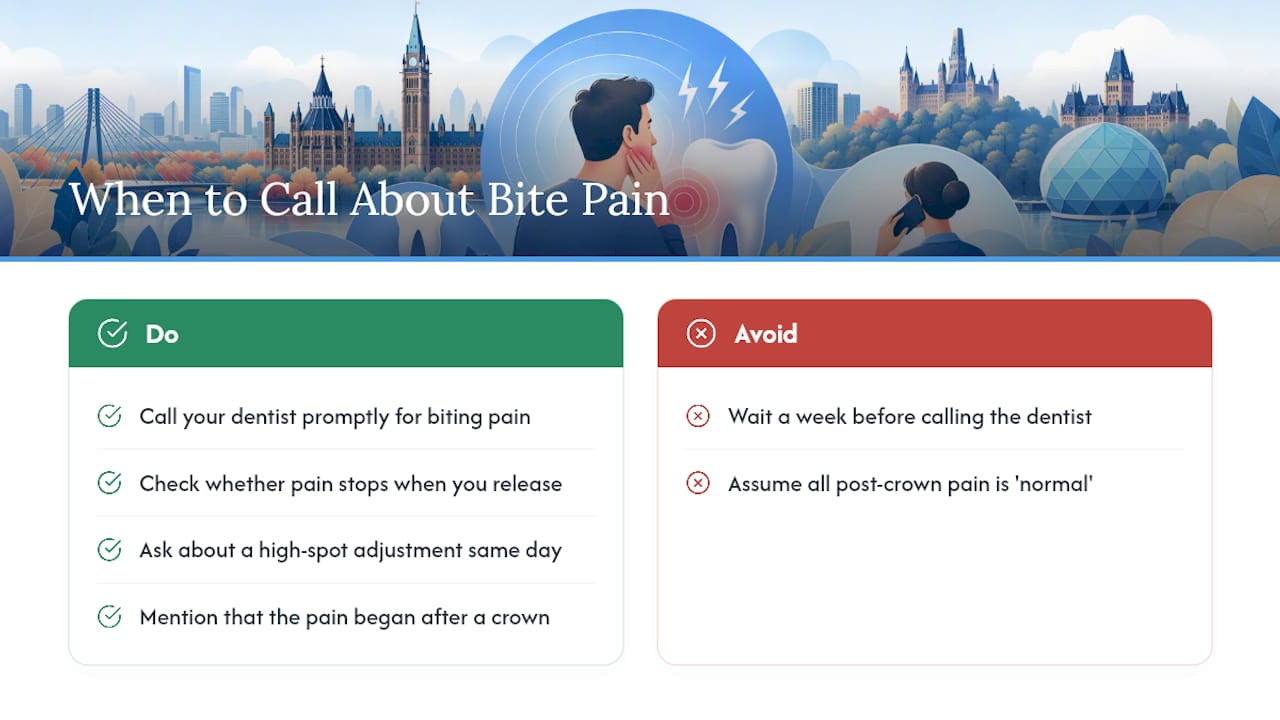
The distinction that actually matters is the one between pain on contact and pain on release. Patients rarely know to look for it, and it’s genuinely more useful than asking “how bad is the pain on a scale of one to ten.” A tooth that hurts the instant you bite and stops the instant you let go is telling you something structural is wrong, and it usually isn’t an emergency in the middle-of-the-night sense. It’s an emergency in the “this is fixable in one visit, so don’t sit on it” sense.
We’ll also say plainly: this article, like most dental content online, would be stronger with named practitioner credentials and real patient outcomes attached to it. We’re working on making that information easier to find on our site, because trust in dentistry should be earned with specifics, not just reassurance.
— Mersal
Get Your Crown Pain Checked at Mersaldental
Mersaldental offers same-day appointments for exactly this kind of problem, so you’re not stuck guessing whether your bite pain can wait until next month. Our downtown Ottawa office handles high-crown adjustments, cracked-tooth evaluations, and infection concerns without requiring you to sit through a long referral process first.

We bill most insurance plans directly, and we accept both the CDCP and IFHP programs, so cost doesn’t have to be the reason you delay care. If swelling, fever, or worsening pain shows up alongside your bite discomfort, treat that as your cue to call rather than wait for a routine slot. For anything urgent, our emergency dental services are built to get you seen quickly, and our full list of services covers everything from crown adjustments to root canal therapy if that turns out to be the fix you need. Book online or call our Lower Town Ottawa office today to get your bite checked before a small problem turns into a bigger one.
Sources
The clinical claims in this article draw on established consumer health and dental resources rather than anecdote. MedlinePlus provided guidance on tooth pain symptoms and when urgent care is warranted. A PMC-indexed article on dental pain and restorative complications informed the mechanisms behind pulpitis and cracked-tooth presentations. The Mayo Clinic’s bruxism overview supported the connection between grinding and crown overload. The American Association of Endodontists clarified the sharp, release-triggered pain pattern typical of cracked teeth, and Cleveland Clinic’s patient guidance on dental crowns rounded out common post-crown complaints and standard fixes.
This article is general information, not a substitute for advice from a qualified doctor. Consult a qualified healthcare professional about your own circumstances before acting on anything here.
Recommended
Comments