How Long Do Fillings Last Before They Need Replacing?


Composite fillings typically last 5 to 15 years, amalgam fillings 10 to 22 years or more, ceramic and gold restorations 15 to 30 years, and glass ionomer fillings 3 to 7 years. These are the ranges Cleveland Clinic reports across common filling materials, and they hold up across most clinical reviews we’ve looked at.
Here’s the part that actually matters more than any number on this list: your dentist doesn’t replace a filling because it turned a certain age. Replacement gets triggered by clinical signs, decay at the margins, a crack, a leak, not by a calendar.
Composite (tooth-colored resin): 5 to 15 years
Amalgam (silver): 10 to 22+ years
Ceramic or gold: 15 to 30+ years
Glass ionomer: 3 to 7 years
If you’re noticing new sensitivity, sharp pain when you bite down, a visible chip, or food constantly getting stuck in the same spot, that’s your cue to get it checked. Waiting rarely helps.
Key Takeaways
Filling lifespan depends primarily on material and clinical condition, not age, so replacement decisions should follow symptoms and exam findings rather than a fixed timeline.
Point | Details |
Material sets the range | Composite lasts about 5 to 15 years, amalgam 10 to 22+ years, ceramic and gold 15 to 30+ years, glass ionomer 3 to 7 years. |
Age isn’t the trigger | Dentists replace fillings for clinical reasons like decay or fracture, not simply because time has passed. |
Silent decay is real | Secondary decay at the margins often shows no symptoms until an X-ray or exam catches it. |
Habits change the outcome | Hygiene, diet, bruxism, and avoiding hard foods all directly affect how long a filling holds up. |
Mersaldental follows clinical guidelines | The practice replaces fillings based on exam findings and follows safety protocols for any amalgam removal. |
Table of Contents
How Long Fillings Last Depends on the Material Used
Not all fillings are built the same, and the material your dentist chose has more to do with your longevity than almost anything else you’ll do at home.
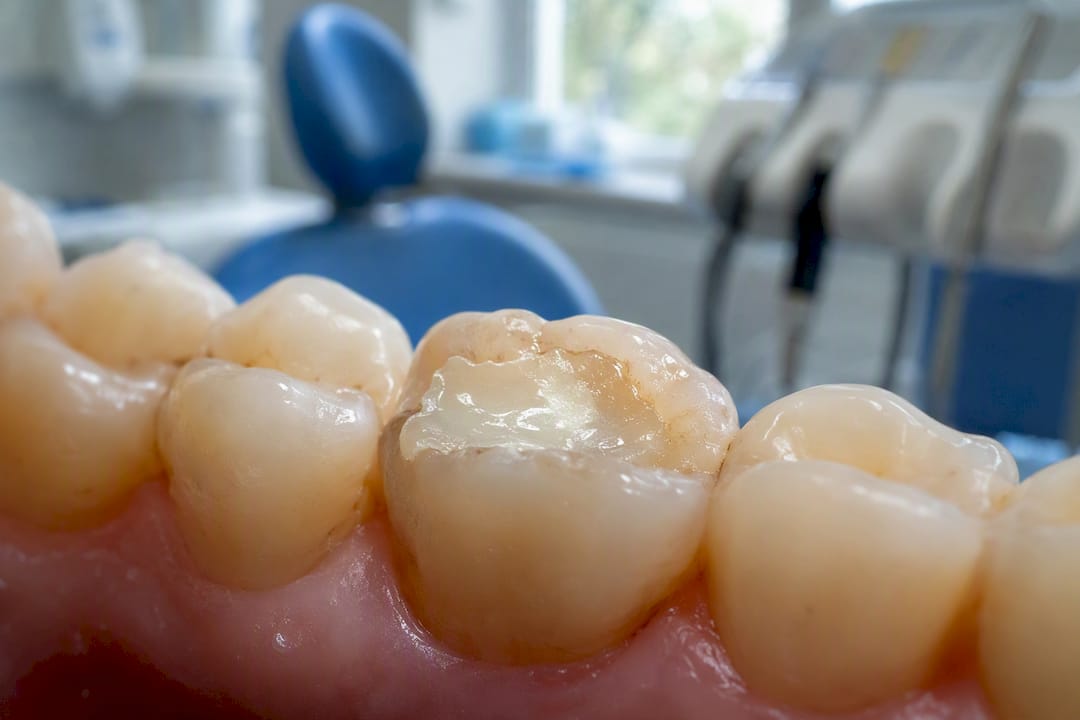
Composite resin is the tooth-colored filling most people get today. It’s a mix of plastic resin and fine glass or ceramic particles, bonded directly to the tooth with an adhesive. Dentists use it in various locations because it blends in and often requires less drilling than older materials. However, its longevity depends heavily on technique and placement conditions.
Amalgam is the classic silver filling: a blend of mercury, silver, tin, and copper. You’ll usually see it in back molars placed years or decades ago. It’s remarkably tough under heavy chewing forces and doesn’t need a perfectly dry field to bond well, which is part of why it lasts so long in real-world mouths. The obvious downside is appearance, and some patients prefer to avoid it for cosmetic reasons.
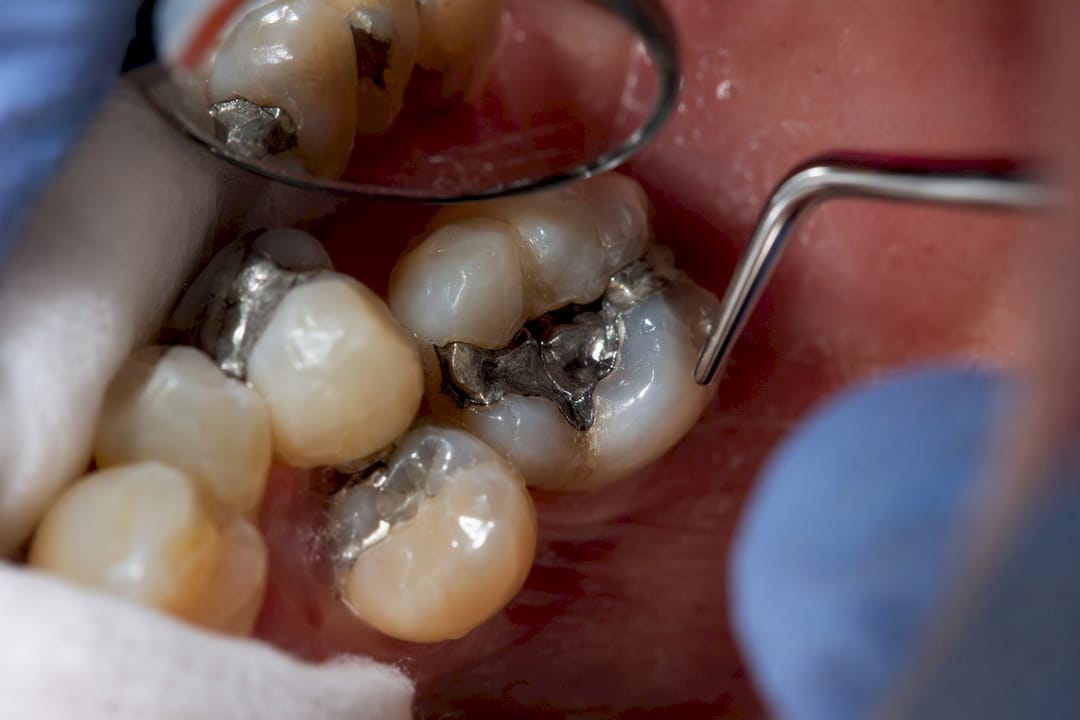
Ceramic and porcelain fillings, along with gold, sit at the premium end. They resist wear exceptionally well and, in gold’s case, actually get along well with the opposing teeth they bite against. Cost is the main barrier, and both usually require a lab step or a more involved appointment.
Glass ionomer is the material dentists reach for in specific situations: small cavities near the gumline, baby teeth, or spots where isolating the area from saliva is difficult. It releases fluoride, which helps prevent decay nearby, but it’s simply not strong enough for the daily grinding pressure of a molar. That’s why it tends to wear out faster than composite or amalgam in adult back teeth.
What Does the Research Say About Filling Lifespan?
The lifespan numbers you see quoted online aren’t guesses. A literature review published in SciELO found that amalgam restorations showed a median survival time of roughly 22.5 years in some studies, among the longest of any direct filling material. Composite came in with solid ten-year survival rates in many trials, but the same review noted results varied widely depending on where the filling sat and how carefully it was placed.
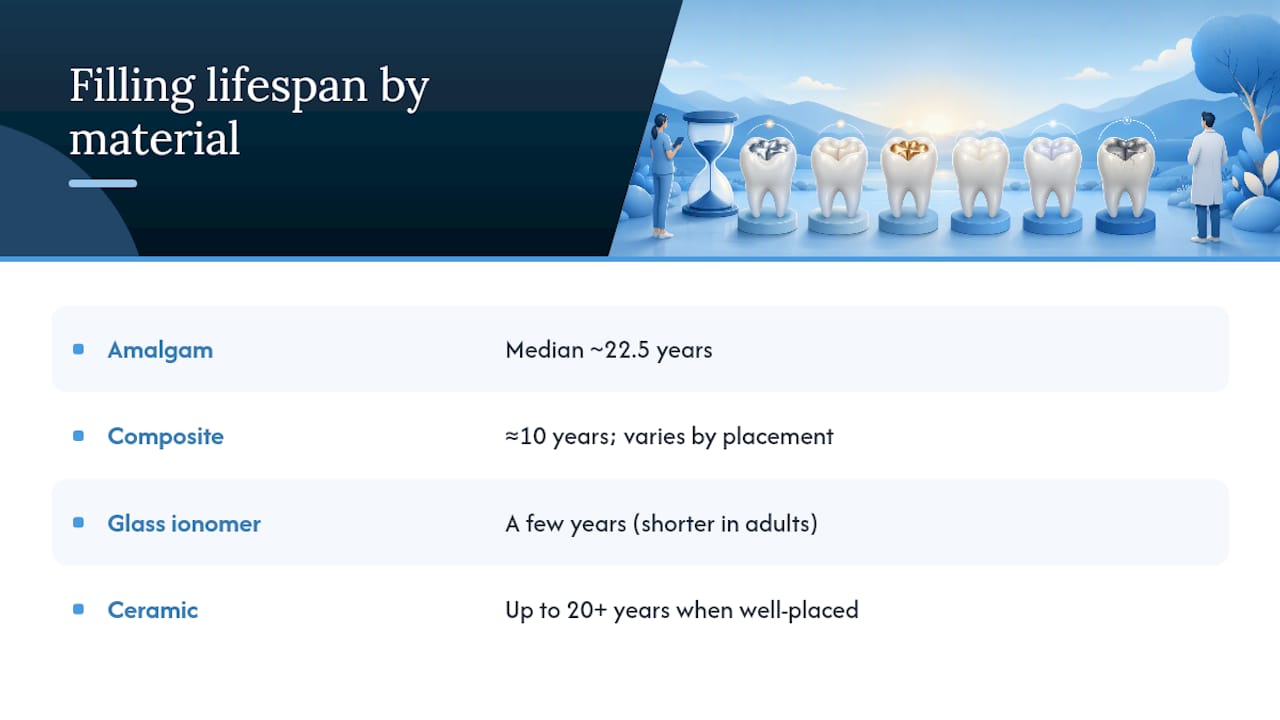
Glass ionomer told a different story. The same research found shorter survival for glass ionomer in permanent adult teeth, sometimes in the range of just a few years when used alone on a heavily loaded tooth, though it performs much better in baby teeth where the bite forces and timeline are different.
It’s worth being clear about what “average” means here. These are population-level numbers pulled from tracking hundreds or thousands of restorations over time. Your specific filling could beat the average by a decade or fail well ahead of it, depending on where it sits in your mouth, how you chew, and how it was placed. Cleveland Clinic confirms that some fillings, particularly amalgam and well-placed ceramic, can last up to 20 years or beyond under the right conditions.
One more point that surprises a lot of patients: operator skill changes the math significantly. Research on composite longevity has found that a composite filling placed with ideal isolation and bonding technique can perform on par with amalgam in many clinical situations, which is a big part of why the “right” material matters less than the hands placing it.
Signs Your Filling Needs Replacing
Your mouth usually gives you clues before a filling fails outright. Here’s what to watch for, and what your dentist checks that you can’t see on your own.
New or lingering sensitivity to hot, cold, or sweet foods that wasn’t there before.
Pain when you bite down, especially a sharp jolt on one specific tooth.
Visible cracks, chips, or gaps around the edge of the filling.
Food constantly trapping in the same spot, which usually means a margin has opened up.
A rough or sharp edge you can feel with your tongue.
Your dentist is looking for a few other things during a routine exam: margin breakdown (where the filling meets the tooth), any give or movement when they probe it, and X-ray evidence of decay forming underneath or beside the restoration.
That last one matters most. Secondary decay at the margins of an old filling is often completely silent. It doesn’t hurt until it’s advanced, which is exactly why routine exams and periodic X-rays exist. Waiting for pain means waiting until the problem is already bigger than it needed to be.
Pro Tip: Ask your dentist to show you your bitewing X-rays side by side from one visit to the next. Spotting a shadow forming under an old filling before it becomes a toothache is one of the most useful five minutes you’ll spend at any checkup.
What Makes a Filling Wear Out Faster or Slower
Some of this is out of your hands. A lot of it isn’t.
Tooth-related factors: Fillings on molars take far more chewing force than those on front teeth, so they tend to wear faster. Larger fillings that replace more of the natural tooth structure are inherently weaker than small ones, and the integrity of the margin, how tightly the filling seals against the tooth, determines whether bacteria can sneak in underneath.
Patient-related factors:
Oral hygiene habits, since plaque buildup at the edges accelerates decay
Diet, particularly frequent sugar or acid exposure
Bruxism or teeth clenching, which stresses fillings well beyond normal biting force
Tobacco use, linked to slower healing and higher decay risk
Saliva quality and flow, which affects how well your mouth naturally buffers acid
Provider-related factors: The material chosen for your specific situation, how carefully the tooth was isolated from moisture during placement, and the bonding protocol used all shape how long that particular filling holds up. This is the piece patients rarely think to ask about, but it’s often the biggest lever of all.
Simple Habits That Extend the Life of a Filling
You don’t need a complicated routine, just consistency.
Brush twice daily with fluoride toothpaste and floss once a day to keep bacteria away from the filling’s edges.
Rinse after meals when you can’t brush right away, especially after anything sugary or acidic.
Book regular checkups so small problems get caught on an X-ray before they turn into pain.
Avoid using your teeth as tools. Opening packages or bottle caps with your teeth is one of the most common ways a filling chips.
Cut back on hard or sticky foods like ice, hard candy, or caramel that stress the edges of a restoration.
Ask about a night guard if you grind or clench, since bruxism puts far more force on a filling than normal chewing ever does.
Preventive hygiene appointments do more than clean your teeth. They give your dentist a chance to catch a failing margin early, sometimes with a small repair instead of a full replacement. Topical fluoride can also help protect the tooth structure surrounding an older filling, and if a cavity keeps recurring in the same spot, that’s usually the point to discuss whether a crown or onlay makes more sense than another filling.
What Happens When a Filling Gets Replaced
Replacing a filling starts with a clinical exam, a bite test to find the exact point of pressure or pain, and an X-ray to see what’s happening below the surface. If decay has spread wide or deep, a simple filling swap might not be the endpoint your dentist recommends.
The old material gets removed and any decay is cleared out.
Local anesthesia keeps the area numb through the process, the same as your original filling appointment.
The tooth gets refilled, or, if enough structure is compromised, your dentist may suggest a crown instead of another filling for better long-term strength.
In rare cases where decay has reached the nerve, root canal treatment becomes necessary before any restoration goes back in.
Recovery is typically quick: mild sensitivity for a day or two is normal, and most patients are back to eating normally within 24 hours.
If your filling has already come out entirely, don’t wait it out. Here’s what to do until you can get in for an exam.
What Mersaldental Sees in Everyday Practice
At Mersaldental, we don’t replace a stable filling just because it’s old. That’s consistent with the Canadian Dental Association’s position: amalgam fillings that are still functioning well don’t need to come out for age or appearance alone.
“Replacement should be based on clinical need, not the calendar.” That’s the standard we hold ourselves to when a patient asks whether their old filling should go.
When removal is genuinely needed, we follow safety protocols like high-volume suction to limit exposure during the process. A few resources worth knowing:
Guidance on what to do when a filling falls out
Our breakdown of crown versus filling decisions
Same-day and emergency care for sudden pain or lost restorations
Why the “Just Wait Until It Hurts” Approach Gets This Wrong
Most advice on filling replacement focuses entirely on the numbers, five years for this material, twenty for that one, and treats those figures as a countdown. That framing misses the actual lesson from the research: secondary decay is frequently silent, which means the patients who wait for pain as their signal are often the ones who end up needing a root canal instead of a simple refill.
The conventional wisdom undersells routine X-rays. A checkup that finds nothing wrong isn’t wasted time; it’s the mechanism that catches a failing margin months or years before it becomes a symptom. If we had to name the single highest-leverage habit in this entire topic, it wouldn’t be avoiding hard candy or getting a night guard, both genuinely useful, but keeping your recall exams on schedule so problems get caught on film rather than felt in your jaw.
What we’d tell any patient asking about an old filling: don’t chase a number. Chase a checkup.
Get Your Fillings Checked at Mersaldental
If it’s been a while since your last exam, or you’ve noticed any of the warning signs covered above, Mersaldental offers same-day assessments and direct insurance billing, including CDCP and IFHP, so getting an old filling checked doesn’t mean waiting weeks or navigating paperwork on your own.

Our downtown Ottawa office handles everything from routine restoration checks to same-day repairs and, when a filling has done its job and simply reached the end of its road, options ranging from a straightforward replacement to a crown or bridge if more support is needed. If your filling has already cracked or come loose, our emergency care page outlines what to expect and how quickly we can get you seen. Ready to find out where your fillings actually stand? Book an exam and get a clear answer instead of a guess.
Frequently Asked Questions
How long do fillings last on average? Most composite fillings last 5 to 15 years, while amalgam fillings often run 10 to 22 years or longer. Ceramic and gold restorations can exceed 15 to 30 years, and glass ionomer fillings typically last only 3 to 7 years in adult teeth.
Can a filling last a lifetime? It’s possible but not something to count on. Amalgam and gold have the best track record for very long-term survival, and some patients keep the same filling for decades, but clinical condition, not a guarantee, ultimately decides.
Do fillings need to be replaced even if they don’t hurt? Not automatically. Stable fillings with no clinical signs of failure don’t need replacement just because they’re old. Replacement gets recommended when an exam or X-ray shows decay, a cracked margin, or a leak, whether or not you feel pain.
What happens if a filling is left too long without replacement? Untreated decay under a failing filling can spread deeper into the tooth, sometimes reaching the nerve and requiring a root canal or crown instead of a simple filling swap. Catching it early with routine exams keeps treatment simpler.
Is it safe to have an old amalgam filling removed? Yes, when done with proper precautions like high-volume suction to limit exposure during the process. Removal is recommended based on clinical need rather than age or appearance alone.
This article is general information, not a substitute for advice from a qualified doctor. Consult a qualified healthcare professional about your own circumstances before acting on anything here.
Sources
Recommended
Comments